
You were hurt in a crash on a curve, a hill, or an intersection that felt dangerous the moment you saw it. Can you hold the city responsible? A new California ruling says the answer can turn on one detail many people never think to check: what warning signs were already there.
On September 24, 2026, the California Court of Appeal decided Tansavatdi v. City of Rancho Palos Verdes, a case from Los Angeles County. The court held that when a city posted warnings as part of an approved road design, a claim that those warnings were not enough may be blocked. A claim that the city gave no warning at all is a different matter.
What Happened on Hawthorne Boulevard
The case began with a fatal crash in 2016. A bicyclist was riding downhill on Hawthorne Boulevard in Rancho Palos Verdes. The bike lane ended before the intersection with Vallon Drive, and the road curved and dropped steeply. At the intersection, an 80-foot tractor trailer was making a right turn. Because the trailer was so long, it started its turn from the lane next to the right turn lane and cut across it. The bicyclist hit the side of the truck and died.
His mother sued the city, along with the truck driver, the trucking company, and other public agencies. Only the claim against the city was part of this appeal. She argued that the intersection was a dangerous condition and that the city did not warn people about it well enough.
Why a City Can Be Protected From a Road Design Claim
A city can be sued when its property is in a “dangerous condition,” meaning it creates a substantial risk of injury to people using it with due care. But California law also gives cities a defense called “design immunity.” It can protect a public agency from claims about a road that was built under a plan a public official approved and that a reasonable official could have adopted.
The point of design immunity, the court explained, is to keep juries from second-guessing engineering choices that public officials already weighed. In this case, everyone agreed the city’s 2009 road plans were protected.
The New Rule About Warning Signs
In 2023, the California Supreme Court ruled in this same case that design immunity does not automatically block a claim that the city failed to warn of a danger. But it left one question open: what happens when the warnings themselves were part of the approved design?
The Court of Appeal answered that question. The city showed that its approved plans included many warnings on the approach to the intersection, including:
- A curve warning sign with a 35 miles per hour advisory speed, with “35” painted on the road.
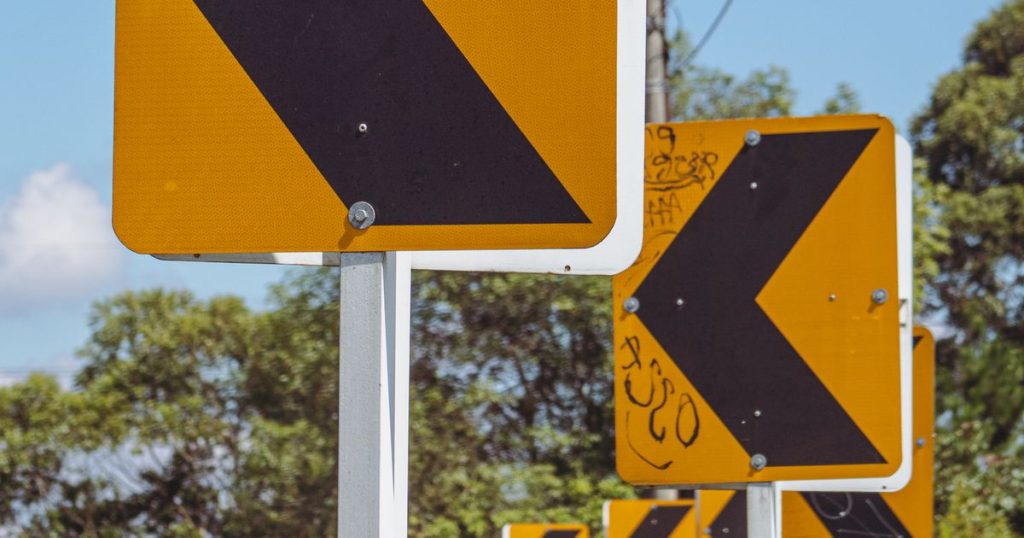
- Six chevron signs along the curve and a sign warning of an 8 percent downhill grade.
- A “signal ahead” sign, matching pavement markings, and a flashing yellow light.
- Two “right lane must turn right” signs.
The family’s expert said the city should have added more, such as a speed feedback sign and other warning signs. The court said that kind of argument is really a complaint about how the warnings were designed. Because the city gave some warning as part of a reasonable approved plan, design immunity applied, and the city won.
When a Failure to Warn Claim Can Still Move Forward
The ruling has limits, and they matter if you were hurt on a public road. The court drew a line between two kinds of cases:
- Cases where the city gave no warning at all of a danger. The court said these cases are different, and its ruling does not cover them.
- Cases where the city gave some warning, and the claim is that the warning was not good enough. These are the cases the new ruling covers.
The court also said design immunity does not protect a design that is truly unreasonable. And a city still has a duty to act when changed conditions make an approved design dangerous. The family in this case did not argue that conditions had changed, so the court did not decide that question here.
The Driver and the Trucking Company Are a Separate Question
Design immunity protects public agencies. It does not decide whether another driver was careless. In this case, the family also sued the truck driver and the trucking company, and those claims were not part of the appeal.
That is a useful reminder after any crash on a hard road. A road can be dangerous, and a driver can still be at fault for how they drove on it. Those are two different claims against two different kinds of parties, with different rules.
A Cost Many People Do Not Expect
The appeal also dealt with money. Early in the case, the city made a formal settlement offer under Code of Civil Procedure section 998. The family did not accept it. After the city won, the trial court awarded the city about $75,979 in costs, including expert witness fees, and the Court of Appeal upheld that award.
A rejected settlement offer can change who pays costs at the end of a case. The firm’s post on settlement offers under section 998 explains how these offers work.
What to Do Now If a Road Played a Part in Your Crash
If you believe the road itself helped cause your crash in Los Angeles County, a few steps can protect your options:
- Photograph the area soon, from the direction you were traveling. Include every sign, painted marking, and signal, and note how far each is from the crash site.
- Get the official crash report. The firm’s guide to getting a CHP or LAPD crash report walks through it.
- Write down what you could and could not see as you approached, while your memory is fresh.
- Pay close attention to time. A claim against a city or other public agency usually must be presented first, on a short deadline. The firm’s post on the six-month government claim deadline explains it.
Signs and markings can change after a crash. In this case, the city later lowered the advisory speed and added more signs. Photos taken early show what was there on the day it mattered.
Common Questions About Dangerous Road Claims
Can I sue a city for a dangerous road in California?
Sometimes. California law allows claims for a dangerous condition of public property, but public agencies have defenses, including design immunity. Whether a claim can move forward depends on the facts, the approved plans, and the warnings that were in place.
Does this ruling mean every warning sign protects the city?
No. The court said design immunity still requires a reasonable, approved plan, and it can be lost when conditions change. The ruling is about claims that existing warnings were not enough, not claims that there was no warning at all.
Is the city the only party I can bring a claim against?
Not always. Another driver, a trucking company, or another party may also be responsible, depending on what happened. Those claims follow their own rules and deadlines.
When to Call Mines Law Firm
We handle auto accident injury claims, and are accepting clients for those. If you are injured in an auto accident, that is when you should call us at 888-700-0093.
ATTORNEY ADVERTISING. This article is for general information only and is not legal advice. Reading it does not create an attorney-client relationship. Every case depends on its own facts, and prior results do not guarantee a similar outcome. Responsible attorney: Jasmine Mines (State Bar No. 331135), Mines Law Firm, 468 N. Camden Drive, Suite 200, Beverly Hills, CA 90210.