
In a California injury case, the formal settlement offers you make before trial can affect how much money you collect after you win. A published decision from September 15, 2026, shows how a higher final offer can erase the benefits of earlier, lower ones.
A Bike Lane, a Semi-Trailer, and Four Offers
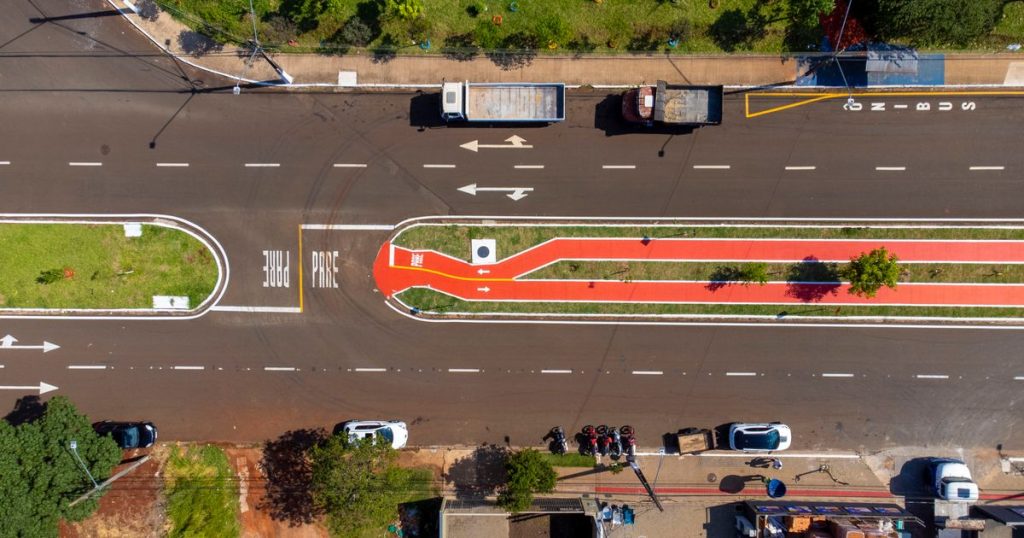
The case is Meehan v. Aguirre, decided by the Court of Appeal in Los Angeles. It began as a bicycle accident case. The collision happened on August 4, 2017. The plaintiff was riding her bicycle in the bike lane on Woodruff Avenue in Lakewood when she collided with a semi-trailer. She sued the driver and the trucking company that owned the truck. She claimed injuries that included a traumatic brain injury.
While the case was pending, she made four formal settlement offers under Code of Civil Procedure section 998:
- $1,000,000 on August 26, 2021
- $1,000,000 again on March 4, 2022
- $1,000,000 again on March 6, 2023
- $2,000,000 on April 27, 2023
The defense let every offer expire. The case went to a six-week bench trial. The judge found the defendants negligent. The judge also found the plaintiff partly at fault and split the blame 85 percent to the defendants and 15 percent to her. Her damages of $1,250,000 were reduced to $1,062,500.
What a 998 Offer Can Do
A section 998 offer is a written settlement offer made under a special statute. As the court explained, it can bring extra money to a plaintiff if three things happen. The offer must meet the statute's content rules. The other side must not accept it within 30 days. Then the defendant must fail to get a better result at trial.
When those steps are met, the court may award the plaintiff expert witness costs incurred after the offer. Those costs are not usually recoverable. In a personal injury case, Civil Code section 3291 can add more. The court quoted it. The judgment bears interest "at the legal rate of 10 percent per annum." That interest is calculated "from the date of the plaintiff's first offer" under section 998 "which is exceeded by the judgment."
In this case, the stakes were large. After trial, the plaintiff asked for $326,093.10 in expert witness fees. She also asked for $313,510.27 in prejudgment interest, counted from her first offer in August 2021.
The Last Offer Rule in Plain English
The trial court said no to both requests. The Court of Appeal agreed.
The reason is called the last offer rule. When a party makes several offers that are never accepted, the most recent one generally replaces the earlier ones. The court stated its holding this way: "where a plaintiff makes multiple valid and unrevoked section 998 offers, and their award is less favorable than their final offer, it is this last offer that controls."
Here, the final offer was $2,000,000. The trial court added the plaintiff's allowable costs of $353,474.93 to the $1,062,500 judgment. The total was $1,415,974.93. That was less than $2,000,000. So the defendants did not fail to get a better result than the controlling offer, and the special benefits did not apply.
The earlier $1,000,000 offers no longer counted, even though the judgment beat them.
Why the Court Would Not Look Back
The plaintiff argued that her earlier offers should still matter. The court disagreed, for reasons tied to the purpose of the statute.
Section 998 exists to encourage settlement before trial. The court relied on older cases, including Wilson v. Wal-Mart Stores, Inc. (1999), which favored a bright line rule. Under that rule, everyone knows which offer will be measured against the judgment.
The court also pointed to a practical concern. On the eve of trial, the plaintiff would not settle for less than $2,000,000. The court was unwilling to award benefits as if she had been willing to settle for $1,000,000.
The court noted limits on the rule. If the last offer is expressly revoked, an earlier offer can become the relevant one. And in Martinez v. Brownco Construction Co. (2013), the California Supreme Court took a different approach when the defendant failed to beat both of two offers.
The Interest Argument Failed Too
The plaintiff made a separate argument about interest. Section 3291 refers to the plaintiff's "first offer" that is exceeded by the judgment. She read those words to mean any earlier offer the judgment beat.
The court rejected that reading. It followed Wilson and another case, Ray v. Goodman (2006). Under that approach, a later offer revokes the earlier one. If the judgment does not beat the operative later offer, the interest rule is not triggered.
The court explained that a different rule would invite "mischief." It also said that settlement policy does not let a court award these benefits just because one side seemed more willing to compromise.
Receipts Matter: The Costs That Were Cut
The ruling also carries a lesson about ordinary court costs under Code of Civil Procedure section 1033.5. As the court explained, some costs are allowed only if they were "reasonably necessary to the conduct of the litigation rather than merely convenient or beneficial to its preparation" and "reasonable in amount."
The person asking for those costs has to prove them. Here, the trial court cut several items:
- $175,409.75 for a trial technician, because no invoices were provided
- $12,125 for a "Day in the Life" video that was not presented at trial, with nothing filed to explain why it was needed
- $6,345.30 for trial transcripts, because there was no evidence of an order or invoices
On appeal, the plaintiff challenged the technician and video cuts. The Court of Appeal found no abuse of discretion, because the record did not contain the documents needed to support those charges.
What Injured People Can Take From This Ruling
This decision does not mean a higher offer is always a mistake. Every case depends on its own facts, and the right number can change as medical care continues and evidence develops. But the ruling shows that settlement numbers have legal effects beyond the talks themselves.
A few points stand out:
- Each new section 998 offer can replace the ones before it.
- The final offer is generally the one compared with the judgment.
- Benefits like expert fees and prejudgment interest can depend on that comparison.
- Costs that are not routine need invoices and a clear reason they were needed.
For anyone working with a personal injury lawyer in Los Angeles, these are useful questions to ask before any formal offer goes out: Why this number, and what happens to earlier offers if this one is made?
When to Call a Lawyer
This article is information only. If you are injured in an auto accident, that is when you should call us at 888-700-0093.
ATTORNEY ADVERTISING. This article is for general information only and is not legal advice. Reading it does not create an attorney-client relationship. Every case depends on its own facts, and prior results do not guarantee a similar outcome. Responsible attorney: Jasmine Mines, Mines Law Firm, 468 N. Camden Drive, Suite 200, Beverly Hills, CA 90210.