
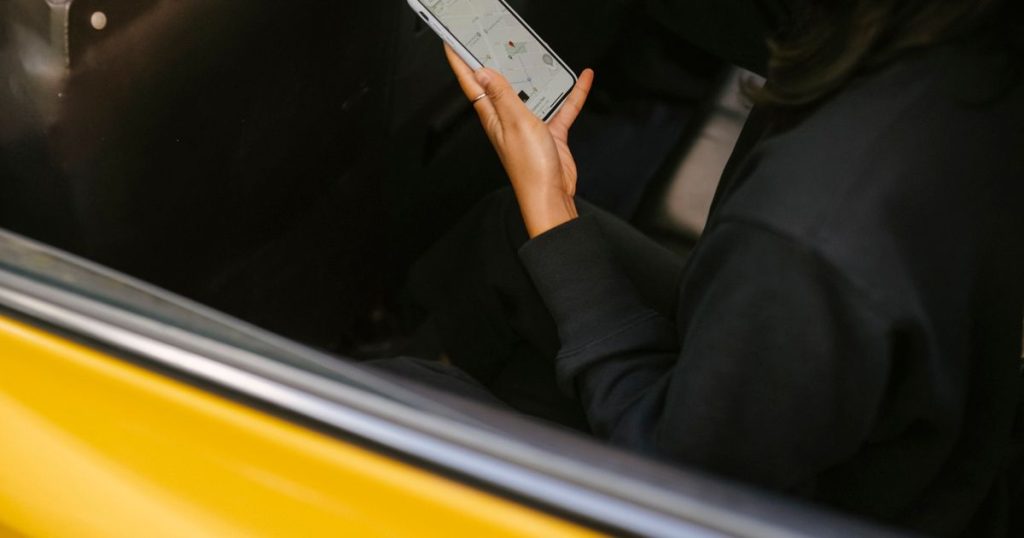
You were in an Uber or Lyft, or a rideshare car hit you, and now you are hurt. The first question most people ask is who pays, and in California the answer depends on one thing many people never think about: what the driver’s app showed at the moment of the crash.
A California law, Public Utilities Code section 5433, sets the insurance that rideshare companies and their drivers must carry. The Legislature changed that law with Senate Bill 371, which took effect on January 1, 2026. This post walks through the rules in plain words and explains what you can do now to protect your claim.
The Short Answer: The App Status Sets the Coverage
California calls Uber, Lyft, and similar services transportation network companies. Section 5433 splits a rideshare driver’s time into periods, and each period has its own insurance rule.
- A ride was accepted or a passenger was in the car: the highest coverage applies.
- The driver was logged on and waiting for a ride, or had just finished one: lower coverage applies.
- The driver was not logged on at all: the rideshare rules in section 5433 do not apply, and the driver’s own policy is usually the starting point.
That is why the timing matters so much: two crashes on the same street, only a minute apart, can involve very different insurance depending on what the driver’s phone showed.
Coverage When a Ride Is Accepted or a Passenger Is in the Car
The highest level starts when the driver accepts a ride request, and it lasts until the ride or the transaction ends, whichever is later. During this period, the law requires primary coverage of $1,000,000 for death, personal injury, and property damage.
Primary coverage means it pays first, before other policies. The driver’s own rideshare policy, the company’s policy, or a mix of both can meet this requirement. The insurer must also defend and indemnify the insured, which means it must provide a lawyer for the insured and pay covered claims.
Coverage for Passengers Hit by an Uninsured Driver
Sometimes the rideshare driver is not at fault, because another driver runs a red light and has no insurance, or carries too little to cover serious injuries. That is where uninsured and underinsured motorist coverage matters.
Under section 5433 as amended by Senate Bill 371, the rideshare company must provide uninsured and underinsured motorist coverage of $60,000 per person and $300,000 per incident while a passenger is in the vehicle. The statute says this coverage is primary and is the company’s obligation alone.
Those numbers are the law as of January 1, 2026. If you read older articles online that describe different amounts, check the date. Our post on what to do when the other driver has only $30,000 in coverage explains how limited coverage can shape a claim.
Coverage When the Driver Is Logged On but Waiting
The second period covers a driver who is logged on to the app but has not been matched with a rider. It also covers the time after a ride ends, until the driver accepts another request or logs off.
During this period, section 5433 requires primary coverage of at least $50,000 for death and injury to one person, $100,000 for death and injury per incident, and $30,000 for property damage. The company must also carry at least $200,000 per occurrence in excess coverage for both itself and the driver. Excess coverage pays after the primary coverage runs out.
This middle period is where many disputes start, because the driver may say he was off the app while the company may say he was not on a trip. Records from the app can help answer that question.
You Do Not Have to Wait for the Driver’s Own Insurer to Say No
People are often told they must first get a denial from the rideshare driver’s personal auto insurer. Section 5433 says otherwise. The rideshare coverage does not depend on a personal auto insurer first denying the claim, and the personal insurer is not required to deny it first.
The law also covers a gap that catches people off guard. If the driver’s rideshare policy has lapsed or no longer exists, the company must provide the coverage from the first dollar of the claim.
Is $1,000,000 the Most You Can Recover?
Not necessarily. Section 5433 sets the minimum insurance, and it also states that it does not limit a rideshare company’s liability for amounts above that required coverage in a lawsuit for damages. Whether more is available depends on the facts of the crash, who was at fault, and the injuries.
Steps to Take After a Rideshare Crash in Los Angeles
The most useful evidence in a rideshare case is often on a phone. These steps can help:
- Take screenshots of your trip in the app, including the trip status, the driver’s name, and the time.
- Write down the driver’s name, license plate, and insurance details, and ask whether the app was on.
- Photograph the cars, the scene, and your injuries.
- Get the crash report. Our guide on how to get your CHP or LAPD crash report in Los Angeles explains how.
- Get medical care and keep every record and bill.
If the driver who hit you is the one at fault, your claim is usually a third-party claim against that driver’s coverage. Our post on how a third-party injury claim works in California covers the basics.
Common Questions About Uber and Lyft Accident Claims
I was a passenger and my rideshare driver caused the crash. Which coverage applies?
If you were in the car during your trip, the ride-accepted period applies. Section 5433 requires $1,000,000 in primary coverage for that period.
A rideshare driver hit my car while he was waiting for a ride. Is there coverage?
Yes, if he was logged on to the app. The logged-on period requires at least $50,000 per person, $100,000 per incident, and $30,000 for property damage, plus $200,000 in excess coverage.
Does it matter if the app was off?
Yes, it matters a great deal. If the driver was fully logged off, section 5433 does not apply, and the claim usually starts with the driver’s own auto policy.
When to Call Mines Law Firm
We handle auto accident injury claims, and are accepting clients for those. If you are injured in an auto accident, that is when you should call us at 888-700-0093.
ATTORNEY ADVERTISING. This article is for general information only and is not legal advice. Reading it does not create an attorney-client relationship. Every case depends on its own facts, and prior results do not guarantee a similar outcome. Responsible attorney: Jasmine Mines (State Bar No. 331135), Mines Law Firm, 468 N. Camden Drive, Suite 200, Beverly Hills, CA 90210.