
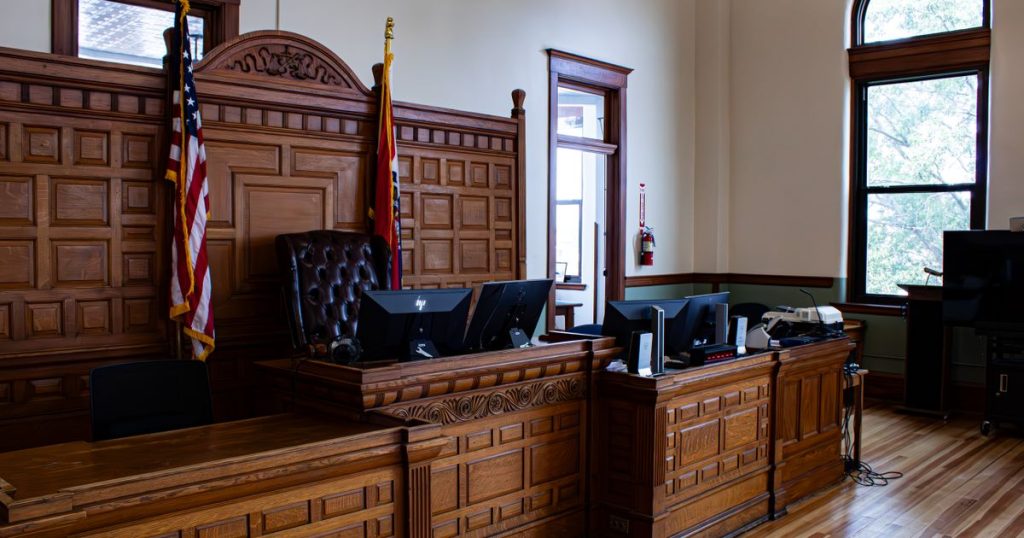
If you asked a California family court for a domestic violence restraining order, the court should decide your request based on the evidence. A published appeals court decision from July 2026 makes clear that a hearing running past its scheduled time is not a reason to throw the request out.
What Happened in In re Marriage of G.E. & I.D.
The case came from San Diego County. In April 2023, a wife filed a request for a domestic violence restraining order, often called a DVRO, against her husband. She asked for protection for herself and the couple’s son. The family court issued a temporary restraining order the same day and gave her sole custody of the child.
The full hearing was continued several times. When it finally went forward in 2024, the wife testified about years of alleged abuse. She described being hit, threatened, and controlled. The court also admitted an audio recording of one incident. The husband denied the allegations.
On the last scheduled hearing day, the husband’s lawyer asked the judge to dismiss the whole case. The judge agreed. The court ended the temporary order and dismissed the request. The reason was not the evidence. The judge said neither side had finished its case in the time the court had set aside.
On July 20, 2026, the Court of Appeal, Fourth Appellate District, Division One, reversed. It ordered the family court to reinstate the temporary restraining order and hold further proceedings on the request.
Why the Appeals Court Said the Dismissal Was Wrong
The husband relied on Code of Civil Procedure section 533. That law allows a court, on notice, to “modify or dissolve an injunction or temporary restraining order” when the facts or the law have changed, or when the “ends of justice” would be served.
The appeals court explained that this law applies to orders that already exist. It does not let a court dismiss a request that has not been decided. In the court’s words, the statute “says nothing about summarily dismissing (i.e., denying) an initial request for an injunction like a DVRO.”
The court also held that the dismissal went beyond the trial court’s power to manage its own cases. California courts have long limited that kind of dismissal to narrow situations, such as a party who fails to pursue the case or a claim that is a sham. Neither was present here. The opinion also noted that the delay came almost entirely from the lawyers, not from the wife.
The court pointed to the strong policy of deciding cases on their merits. It quoted Family Code section 6309, where the Legislature declared that “Domestic violence is an urgent public safety and public health crisis.” The same section states the goal of making sure survivors can seek and receive protection “without delay.”
The opinion put it plainly. The family court “exalted expediency over justice.”
A Temporary Order Should Not Disappear Without Notice
The temporary restraining order ended at that same hearing, right after the husband’s lawyer asked for it out loud. Section 533 allows a court to change or end an order only “on notice.” The wife had no advance warning that her protection might end that day. She had no real chance to prepare a response.
The Court of Appeal held that ending the temporary order this way was also an abuse of discretion.
This matters for anyone protected by a temporary order. Under Family Code section 245, when a hearing is continued, a temporary restraining order generally stays in effect until the end of the continued hearing, unless the court orders otherwise.
Judges Can Still Keep Hearings on Track
This decision does not mean a hearing can run forever. The court recognized that judges have real power to control their courtrooms. According to the opinion, a judge can:
- Set clear time limits at the start of a hearing.
- Adjust those limits as the hearing goes on.
- Exclude evidence that repeats itself or is only slightly relevant.
- Stop the parties from adding new evidence after time runs out, and then decide the case on the record.
What a judge should not do, according to this decision, is skip the merits and dismiss the request because the clock ran out.
What California Law Counts as Abuse
Under Family Code section 6300, a court may issue a restraining order if the evidence shows “reasonable proof of a past act or acts of abuse.” The court may rely on the testimony of the person asking for the order. Under Family Code section 6301, the court must look at the totality of the circumstances. The time since the most recent act of abuse is not, by itself, the deciding factor.
Abuse is not limited to hitting. Family Code section 6320 allows orders against “disturbing the peace of the other party,” which includes coercive control. The law lists examples, such as:
- Cutting a person off from friends, relatives, or other support.
- Controlling or monitoring a person’s movements, messages, money, or access to services.
- Using threats, including threats based on immigration status, to force a person to do something or to stop doing something.
How Long a Restraining Order Can Last
After a full hearing, Family Code section 6345 allows the personal conduct, stay-away, and residence exclusion orders to last up to five years. The protected person can ask to renew the order within the three months before it expires. A renewal can be for five or more years, or permanent. The law says it can be granted “without a showing of further abuse since the issuance of the original order.”
Steps to Take Before Your Restraining Order Hearing
Whether you are asking for an order or responding to one, preparation matters. Consider these steps:
- Ask the court how much time the hearing will have, and plan your evidence to fit that time.
- Put your most important evidence first, such as recordings, texts, photos, and police reports.
- Keep copies of every order, including the temporary order and each extension.
- Check the expiration date on your temporary order each time the hearing is continued.
- If the other side asks the court to end your order at the hearing, ask the judge for time to respond.
- If a court dismissed your request without deciding it, talk with a lawyer quickly. Appeal deadlines are short.
When to Call a Lawyer
This article is information only. If you are injured in an auto accident, that is when you should call us at 888-700-0093.
ATTORNEY ADVERTISING. This article is for general information only and is not legal advice. Reading it does not create an attorney-client relationship. Every case depends on its own facts, and prior results do not guarantee a similar outcome. Responsible attorney: Jasmine Mines, Mines Law Firm, 468 N. Camden Drive, Suite 200, Beverly Hills, CA 90210.
Sources checked (October 3, 2026): In re Marriage of G.E. & I.D. (July 20, 2026, D085597), California Court of Appeal, Fourth Appellate District, Division One, opinion read on courts.ca.gov; Family Code sections 245, 6300, 6301, 6309, 6320, and 6345, and Code of Civil Procedure section 533, read on leginfo.legislature.ca.gov.