
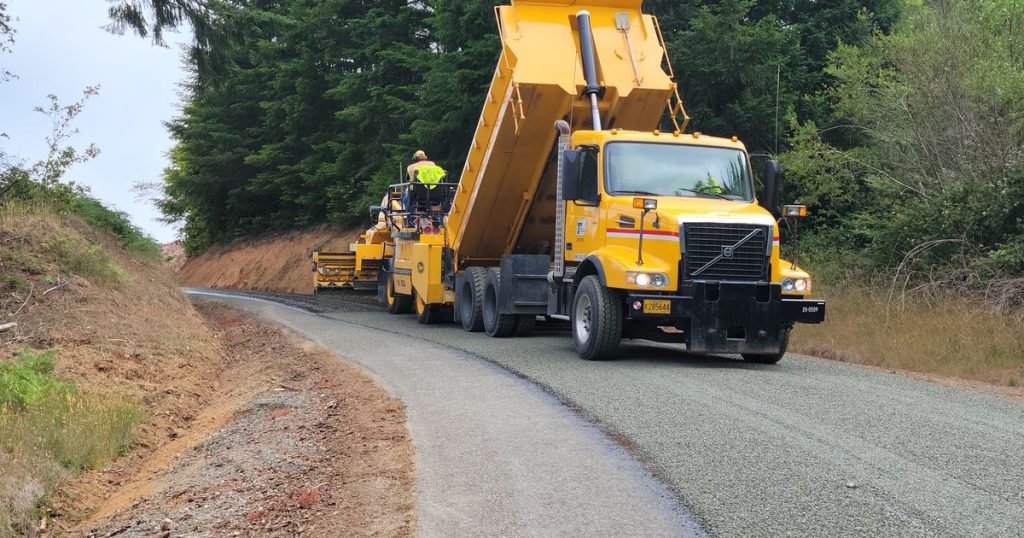
If a state or city vehicle hits you in California, you usually cannot go straight to court. A new appellate ruling shows that the claim you file first can decide whether your lawsuit survives.
A Crash With a Caltrans Truck
The case is Weston v. Department of Transportation, decided by the Third District Court of Appeal on August 31, 2026. On September 28, 2026, the court ordered part of the opinion published.
According to the opinion, a driver on a state highway in Butte County in April 2018 came up behind a Caltrans dump truck. As she began to pass it, the truck turned left. Her car hit the back of the truck and then a guardrail. She suffered injuries, including a broken knee.
She sued Caltrans and its driver. Five years into the case, her lawsuit was dismissed, and the Court of Appeal affirmed that dismissal.
Why You Cannot Simply Sue the Government
California’s Government Claims Act sets the rules for injury cases against public agencies. Before you can sue for money, you must first present a written claim to the agency.
Government Code section 945.4 says that “no suit for money or damages may be brought against a public entity” on a covered cause of action “until a written claim therefor has been presented to the public entity” and the agency has acted on it or is treated as having rejected it.
For an injury claim, the deadline is short. Government Code section 911.2 requires the claim to be presented “not later than six months after the accrual of the cause of action.” We covered that deadline in an earlier post, Hurt by a City Bus, a Pothole, or at School? California Gives You Only Six Months to File a Claim.
The Vehicle Code Did Not Create a Shortcut
The published part of the Weston opinion answers one question: does the claim rule apply when the injury comes from a government vehicle?
Vehicle Code section 17001 makes a public agency responsible for some crashes caused by its drivers. It says: “A public entity is liable for death or injury to person or property proximately caused by a negligent or wrongful act or omission in the operation of any motor vehicle by an employee of the public entity acting within the scope of his employment.”
The injured driver argued that this statute stands on its own, outside the Government Claims Act, so no claim was needed for it. The court disagreed. It pointed to Government Code section 905.2, which requires a claim for money or damages against the state “for an injury for which the state is liable.”
The court noted that only a few narrow exceptions exist, such as federal civil rights claims, and none covers a claim under section 17001. The bottom line from the published holding:
- A crash with a state vehicle can create liability under Vehicle Code section 17001.
- That liability still runs through the Government Claims Act.
- A timely written claim still has to come first.
What Went Into the Claim Mattered
The rest of the opinion is unpublished. That means other courts cannot rely on it as precedent. Still, it shows how the claim rules played out for this driver.
On the state’s claim form, her attorney wrote “See Attachment A” in the spaces asking what happened and why the state was at fault. Attachment A was the 13-page California Highway Patrol collision report.
That report did not help her. It said she told the officer she was going 67 miles per hour in or near a construction zone. The officer concluded she “was the cause” of the crash. He found that she made an unsafe pass at an unsafe speed.
Her later complaint told a different story. It said she was passing “lawfully” and that the Caltrans driver made an unsafe left turn.
The “Fairly Reflected” Rule
California courts have long allowed a lawsuit to add details to a government claim. But the lawsuit cannot switch to a different set of facts. The opinion quotes the California Supreme Court’s decision in Stockett v. Association of California Water Agencies Joint Powers Insurance Authority (2004): the factual basis for recovery in the complaint must be “fairly reflected” in the claim.
Here, the court said the claim, read as a whole, described a crash for which the driver herself was found at fault. It gave the state no clear reason to think its own driver was to blame. So the lawsuit’s theory did not match the claim, and the court found the gap was fatal.
Two related arguments also failed in the unpublished part:
- Waiver. The state did not lose this defense by staying silent when the claim was filed. It could not know the lawsuit would tell a different story until the lawsuit was filed.
- Estoppel. The driver did not show that the state did anything to lead her to file the claim the way she did.
The court also noted that the state first raised the problem more than five years into the case. That timing did not save the lawsuit, because the defense was raised in response to new amended complaints.
What This Means After a Crash With a Government Vehicle
The same claim rules can apply to crashes with city buses, police cars, county trucks, and state work vehicles. This ruling is a reminder that the paperwork at the start of the case carries real weight.
- The six-month claim deadline in Government Code section 911.2 applies to injury claims, including crashes with public vehicles.
- The claim should describe what happened and why the agency is responsible.
- Attaching a police report can bring in facts and conclusions that hurt the claim.
- A later lawsuit can add details, but it should not switch to a story the claim never told.
Whether a claim was timely, complete, and consistent depends on the facts and the documents in each case. A personal injury lawyer in Los Angeles can review those documents and explain the options that may still be available.
When to Call Mines Law Firm
We handle auto accident injury claims, and are accepting clients for those. If you are injured in an auto accident, that is when you should call us at 888-700-0093.
ATTORNEY ADVERTISING. This article is for general information only and is not legal advice. Reading it does not create an attorney-client relationship. Every case depends on its own facts, and prior results do not guarantee a similar outcome. Responsible attorney: Jasmine Mines, Mines Law Firm, 468 N. Camden Drive, Suite 200, Beverly Hills, CA 90210.